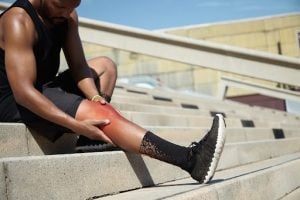
Obesity and knee osteoarthritis – what’s the link?

Online Self-Paced Course

REPLAY

Obesity and knee osteoarthritis – what’s the link?

Instructor(s):

Audio:

English

Subtitles available:

None

Handout available:

English

Duration:

1 h

Date:

Time:

★★★★★
4.8 out of 5 (53 reviews)

Current Status

Not Enrolled

Price

$75.00

Get Started

or

Summary

Obesity is a modifiable risk factor for the development of knee osteoarthritis , as well as for the worsening of pain and physical function in patients with knee osteoarthritis. As a result, weight management, along with exercise and patient education, is recommended as first-line treatment for the management of knee osteoarthritis.

This 1-hour webinar will provide an overview of the most recent research examining the potential link between obesity and knee osteoarthritis, and provide healthcare professionals with evidence-based recommendations to inform their clinical practice.

Objectives

By the end of this 1-hour webinar, participants will be able to:

  1. Appreciate the complex, multifactorial nature of knee osteoarthritis;
  2. Understand the importance of obesity as a risk factor for the development of knee osteoarthritis;
  3. Understand the potential mechanisms linking obesity and knee osteoarthritis;
  4. Understand best practice recommendations regarding weight loss as a potential treatment strategy for the management of knee osteoarthritis.

Course Content

Obesity and knee osteoarthritis – what’s the link?
Give Feedback

Target professionals

, , , , , , ,

Content is not intended for use outside the scope of the learner’s license or regulation. Continuing education courses should not be taken by people who are not licensed or regulated.This does not apply when they are part of a specific plan of care. By participating in this course, the participant agrees to respect his/her professional scope of practice.

Instructors

Certificate of completion

Access

Regular Access: 6 months
Scientific membership: Unlimited

Share

Twitter
LinkedIn
Facebook
Email

Please register for the course or log in to access this content.

Average Review Score:
★★★★★
Avis
★★★★★

Loved it thanks

Très bon cours
★★★★★

Interesting

Interessant
★★★★★

Interesting

useful
★★★★★

The information was very , but the pace was very fast.

Obésité et arthrose du genou : quel est le lien ?
★★★★★

Very interesting training

Très instructif!
★★★★★

Thank you for discussing the metabolic effects of obesity and OA.

Obesity and knee OA
★★★★★

Really interesting

.
★★★★★

.

★★★★★

Well explain!

★★★★★

Thank you

★★★★★

Good

★★★★★

Great informations, great approach to the subject. Really helpful

★★★★★

Very interesting. Is there a way to know in advance whether the webinar will be in French or English? Thank you.

★★★★★

Thank you

★★★★★

thank you

★★★★★

good narrator but would have appreciated in French especially since he speaks in French.

★★★★★

Interesting and enlightening

★★★★★

Very interesting!

★★★★★

Good summary, makes you want to take the other courses!

★★★★★

very good webinar

★★★★★

Very good

★★★★★

Good course!

★★★★★

Well-populated

★★★★★

Well-populated

★★★★★

good course

★★★★★

thank you

★★★★★

Interesting topic

★★★★★

THX

★★★★★

Good review of the links between Knee OA and obesity

★★★★★

Interesting course on studies showing a link and the strength or weakness of this link between weight and the side effects of obesity on the risk of osteoarthritis.

★★★★★

Great presentation Anthony!

Thank you

★★★★★

Good course. Simple, concrete data for clinical application

★★★★★

Great webinar!

★★★★★

All very well explained & will definitely be beneficial in my clinical approaches and education for patients

★★★★★

Thank you!

★★★★★

Good update on recommendations/provisions.

★★★★★

Good overview

★★★★★

interest

★★★★★

Very good!

★★★★★

Interesting topic

★★★★★

Good presentation, very informative and up to date.

★★★★★

Very interesting

★★★★★

Thank you very much Antony, I enjoyed this webinar and you are an excellent communicator!

★★★★★

Interesting

★★★★★

Super interesting for the management of this type of patient

★★★★★

Good presentation and review of the literature.
Thank you
French subtitles would have been appreciated!

★★★★★

Nice revision

★★★★★

Beautiful research and dynamic speaker

★★★★★

Interesting!

★★★★★

.

★★★★★

good

★★★★★

Great presentation

★★★★★

Concise and clear

1 2

You must log in and have started this course to submit a review.

FAQ

Each health professional who is a member of a college or association must complete continuing education units (CEU) annually. Here is some information about kinesiologists, physiotherapists and physiotherapy technologists.

Kinesiologist, FKQ

All accredited members of the Fédération des Kinésiologues du Québec (FKQ) must accumulate 30 credits of recognized continuing education every two years from the year of their accreditation. These credits can be obtained from continuing education offered by the FKQ and/or other organizations recognized by the FKQ. In order to facilitate your task of analyzing the credits granted to your course, the FKQ Continuing Education Committee gives you access to an equivalency grid.

For each* of your courses at Bia education, you will receive a certificate of participation confirming the number of hours of course received.

*Excluding course not accessible to kinesiologists, this exclusion will be mentioned in the course description.

Kinesiologist-kinesitherapist, A.K.K.O.M.Q.

All members of the A.K.K.O.M.Q. must accumulate continuing education units. The association intends to ensure the safety and quality of kinesiology and kinesiology-kinesitherapy interventions, by requiring its members to maintain and improve their knowledge through the many continuing education courses offered annually, and to put their skills into practice while respecting the code of ethics. Credits can be obtained from continuing education offered by the FKQ and/or other organizations recognized by the FKQ.

For each* of your courses at Bia education, you will receive a certificate of participation confirming the number of hours of course received.

*Excluding course not accessible to kinesitherapists, this exclusion will be mentioned in the course description.

Physiotherapist and physiotherapy technologist, OPPQ

In the case of physiotherapists, each member must have a minimum of 45 hours of continuing education units (CEU) during the reference period, which is three years. Of these 45 hours, at least 30 hours must be accumulated in formal learning activities. The remaining continuing education hours can be accumulated in autonomous, formal learning activities or in a combination of both categories.

A CEU is equivalent to one hour of course, which is the actual time spent by the member to acquire or update his or her knowledge or skills. In the context of a formal activity, the member is in a learning situation when acting as a participant. Time spent on breaks, meals or any other activity without academic content should therefore be subtracted from the calculation of CEUs.

A formal learning activity is defined as an activity designed and delivered by experts in the subject matter and with a predetermined structure, content, objectives and duration. All the course offered by Bia education are therefore likely to be considered as a formal learning activity. During your course at Bia education, you will receive a certificate attesting to the number of hours of continuous education granted to the event.

Then, it is the physiotherapist’s role to define whether the suggested training theme is related to his or her practice and will allow him or her to optimize his or her professional competence.

Write to us at info@bia-education.com for more information.

All cancellation requests must be made by email to info@bia-education.com

Membership

No refunds will be issued more than 24 business hours after the order has been placed and membership cancellations must be made before the renewal date to avoid additional charges. The membership can be transferred to another person upon request.

Courses

If you have to cancel your attendance at an in-class course or online live course:

  • We will refund 100% of the amount if the cancellation request is made 30 days before the course date.
  • We will refund 75% of the amount or we will give you a credit of 100% of the initial amount that will be applicable on Bia education products if the request is made between 29 and 15 days before the course.
  • We will give you a credit of 75% of the initial amount that will be applicable on Bia education products if the request is made between 14 and 1 day before the course.


If we have to cancel or postpone the in-class course or online live course because the number of participants is insufficient, the registrants will be informed by email within 10 days before the course. Participants will have 3 choices:

  • Maintain their registration and reserve their place for the postponed course at a later date.
  • Obtain a credit equivalent to 100% of the initial amount which is applicable on all Bia education products.
  • Obtain a refund equivalent to 100% of the initial amount.


For online course, we can refund you the full amount on:

  • “Pre-orders”, i.e. courses that you have already paid for, but which you have not yet had access to;
  • Courses to which you have received access within the last 5 business days and which have not yet been started.

Yes, it is possible to extend access to your courses through our Bia membership. This membership allows you, among other benefits, to enjoy extended access to the courses beyond the initial 6 months.

Suggested Courses

FREE FOR MEMBERS

Noisy Joints: Understanding the Meaning of a Misunderstood Clinical Sign

LIVE

Noisy Joints: Understanding the Meaning of a Misunderstood Clinical Sign – LIVE

FREE FOR MEMBERS

Diagnosis and Management of Rotator Cuff Tendinopathy: Clinical Practice Guideline

« » page 1 / 57

Suggested courses

🎉 Bia celebrates 10 years

 use promo code 10ANS at checkout and save 20% on your next courses