
Online Self-Paced Course

Global Approach to Pain Management – Level 3

Audio:

French

Subtitles available:

None

Handout available:

French

Duration:

47.25 h

Date:

Time:

Current Status

Not Enrolled

Price

$1,650.00

Get Started

or

Certification

This course is part of the Certification : Global Approach to Pain Management. Purchase this certification and save 15% on the price of individual courses. To obtain certification, you must have completed the following courses and passed the certification exam:

Level 3 summary

In this final level of certification, the student will put into practice the global approach to pain management (GAPM) in three major regions of the human body:

  • Abdomino-lumbo-pelvic (ALP) region
  • Cervico-thoracic region
  • Extremities

In each section, the participant will be guided through theoretical concepts related to anatomy, myofascial lines, conditions, and evidence for the region. They will also learn how to refine the GAPM assessment to better evaluate the affected area.

Using case studies and practical examples, the participant will be guided in managing regional conditions through mindful therapy, with demonstrations of treatment techniques. Through case studies, the student will then apply their clinical reasoning using the tools of the comprehensive pain approach that they have already integrated at level 2. These techniques will encompass cognitive approaches, manual techniques, movement strategies with yoga practices, and stress response management.

Objectives:

Global Objective of Level 3 : Apply the GAPM, with its key elements, to the assessment, clinical reasoning, and management of individuals in pain for various body regions.

Part 1: ALP

  • Understand how to integrate the pelvic floor and central unit in the assessment and management of individuals with pain in the ALP region.
  • Recognize BPS+ factors associated with pelvic health disorders and their links to pain in the ALP region.
  • Acknowledge the influence of breathing and posture on the ALP region.
  • Recognize the influence of the myofascial system and deep lateral and anterior myofascial lines on pain in the ALP region.
  • Evaluate, within one’s scope of competence, individuals in pain using the ALP-specific GAPM assessment.
  • Utilize GAPM tools to assist clinical reasoning, guiding management and developing an action plan in collaboration with individuals experiencing pain in the ALP region.
  • Select and apply the most relevant therapeutic strategies of GAPM for individuals with pain in the ALP region.
  • Guide the management of individuals in pain with mindful therapy.
  • Understand the complete application of GAPM in clinical case studies specific to the ALP region.
  • Know when and to which other healthcare professional to refer individuals with pain in the ALP region.

Part 2: Cervico-Thoracic

  • Understand the influence of posture on the cervico-thoracic region.
  • Recognize the impact of breathing on the cervico-thoracic region.
  • Be able to assess breathing according to GAPM in the cervico-thoracic region.
  • Recognize the influence of the myofascial system and spiral and deep upper anterior myofascial lines on pain in the cervico-thoracic region.
  • Evaluate, within one’s scope of competence, individuals in pain using the cervico-thoracic region-specific GAPM assessment.
  • Utilize GAPM tools to assist clinical reasoning, guiding management and developing an action plan in collaboration with individuals experiencing pain in the cervico-thoracic region.
  • Choose and apply the most relevant GAPM management strategies for individuals with pain in the cervico-thoracic region.
  • Guide the management of individuals in pain with mindful therapy.
  • Understand the complete application of GAPM in clinical case studies specific to the cervico-thoracic region.
  • Know when and to which other healthcare professional to refer individuals with pain in the cervico-thoracic region.

Part 3: Extremities

  • Be familiar with the latest evidence regarding osteoarthritis in the context of extremity management according to GAPM.
  • Be familiar with the latest evidence regarding tendinopathies in the context of extremity management according to GAPM.
  • Recognize the central nervous system’s influence on tendinopathies of the lower limbs.
  • Recognize the influence of the myofascial system and functional myofascial lines on extremity pain.
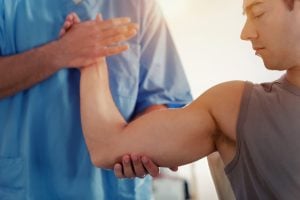
  • Evaluate, within one’s scope of competence, individuals in pain using the extremity-specific GAPM assessment.
  • Utilize GAPM tools to assist clinical reasoning, guiding management and developing an action plan in collaboration with individuals experiencing pain in the extremities.
  • Choose and apply the most relevant therapeutic strategies of GAPM for individuals with pain in the extremities.
  • Guide the management of individuals in pain with mindful therapy.
  • Understand the complete application of GAPM in clinical case studies specific to the extremities.
  • Know when and to which other healthcare professional to refer individuals with pain in the extremities.
Instructors

Prerequisites

Completion of level 1 and level 2

Certificate of completion

Access

Regular Access: 6 months
Scientific membership: Unlimited

Share

Twitter
LinkedIn
Facebook
Email

Please register for the course or log in to access this content.

Average Review Score:
★★★★★

You must log in and have started this course to submit a review.

FAQ

Your certificate is automatically generated once the course is 100% completed.

To access it:

  1. Log in to your account
  2. Go to your dashboard and select the relevant course
  3. Make sure the course is completed at 100% ! The certificate will automatically appear on the course page and it will be located on the right side of the image, in a green box.
  4. You can then click on it to download it

You can also watch this short demo video if needed.


If your certificate does not appear, please make sure all lessons are completed. Feel free to contact us if needed.

To access and download or print handout, follow these steps:

  1. Log in to your account
  2. Go to your dashboard and select the relevant course
  3. Scroll below the course image and click on the “Course Content” tab
  4. Click on “Handout and Resources” to expand the section
  5. Select and download your preferred format


You can also watch this short demo video if needed.

Access to each course is valid for 6 months from the moment the course is added to your account.

Courses are available immediately after purchase, except for pre-sale courses. For pre-sale courses, you will receive an email when they become available. Make sure we are not in your spam !

To complete your course after the 6-month access period, we invite you to become a member of the Bia membership and take the time you need. You can purchase the membership according to the payment period of your choice:

  • Monthly
  • Yearly (15% discount)

If you wish to transfer a course to your colleague (for example), you can email us at info@bia-education.com. We will be happy to transfer the access to this person, if the course has not been started.

In any case, it is forbidden to share the accesses to anyone. The quantity of a course purchased is equivalent to the number of accesses granted. A certificate is automatically transmitted after the completion of a course and it is impossible to change the name and date on this certificate once issued.

You will receive a notification email as soon as the pre-sale course is added to your account. This will mark the beginning of your 6-month access period.

Make sure we’re not in your junk folder!

Most access to courses is provided instantly (unless otherwise specified) to the email address provided at the time of purchase. To access your courses, simply go to “My Dashboard”.

If you can’t find the courses you’ve registered for, don’t worry! Some courses require manual verification, so you’ll receive the information and/or access within the next 24 business hours.

If you still haven’t received your courses after 24 business hours, write to us at info@bia-education.com and we’ll rectify the problem!

For most courses, you can access French subtitles by clicking on “cc” in the video window at the bottom right. You can then select the language of your choice and leave them enabled or disabled. If the handout are available in French, you can see them by clicking on “Handout and resources” in the “Course content” tab when you are on the main course page. You can also select the language of your choice at the bottom of the page .

For a demonstration, click here!

Yes! Subscription members always receive at least 10% off all à la carte courses not included in their plan but cannot be combined. The discount is automatically applied at checkout when you’re logged into your member account.

Each health professional who is a member of a college or association must complete continuing education units (CEU) annually. Here is some information about kinesiologists, physiotherapists and physiotherapy technologists.

Kinesiologist, FKQ

All accredited members of the Fédération des Kinésiologues du Québec (FKQ) must accumulate 30 credits of recognized continuing education every two years from the year of their accreditation. These credits can be obtained from continuing education offered by the FKQ and/or other organizations recognized by the FKQ. In order to facilitate your task of analyzing the credits granted to your course, the FKQ Continuing Education Committee gives you access to an equivalency grid.

For each* of your courses at Bia education, you will receive a certificate of participation confirming the number of hours of course received.

*Excluding course not accessible to kinesiologists, this exclusion will be mentioned in the course description.

Kinesiologist-kinesitherapist, A.K.K.O.M.Q.

All members of the A.K.K.O.M.Q. must accumulate continuing education units. The association intends to ensure the safety and quality of kinesiology and kinesiology-kinesitherapy interventions, by requiring its members to maintain and improve their knowledge through the many continuing education courses offered annually, and to put their skills into practice while respecting the code of ethics. Credits can be obtained from continuing education offered by the FKQ and/or other organizations recognized by the FKQ.

For each* of your courses at Bia education, you will receive a certificate of participation confirming the number of hours of course received.

*Excluding course not accessible to kinesitherapists, this exclusion will be mentioned in the course description.

Physiotherapist and physiotherapy technologist, OPPQ

In the case of physiotherapists, each member must have a minimum of 45 hours of continuing education units (CEU) during the reference period, which is three years. Of these 45 hours, at least 30 hours must be accumulated in formal learning activities. The remaining continuing education hours can be accumulated in autonomous, formal learning activities or in a combination of both categories.

A CEU is equivalent to one hour of course, which is the actual time spent by the member to acquire or update his or her knowledge or skills. In the context of a formal activity, the member is in a learning situation when acting as a participant. Time spent on breaks, meals or any other activity without academic content should therefore be subtracted from the calculation of CEUs.

A formal learning activity is defined as an activity designed and delivered by experts in the subject matter and with a predetermined structure, content, objectives and duration. All the course offered by Bia education are therefore likely to be considered as a formal learning activity. During your course at Bia education, you will receive a certificate attesting to the number of hours of continuous education granted to the event.

Then, it is the physiotherapist’s role to define whether the suggested training theme is related to his or her practice and will allow him or her to optimize his or her professional competence.

Write to us at info@bia-education.com for more information.

Suggested Courses

LIVE

Diagnosis and Management of Rotator Cuff Tendinopathy: Clinical Practice Guideline (LIVE)

FREE

Clinical decision support tool for traumatic injuries of the distal upper limb

Personality Types, Psychology of Motivation and Pain – Live

« » page 1 / 56

Suggested courses

Global Approach to Pain Management: Breathing

Instructor:
Emmanuelle Rivest-Gadbois

Global Approach to Pain Management: Meditation

Instructor:
Emmanuelle Rivest-Gadbois

Global Approach to Pain Management – Level 1

Instructor:
Emmanuelle Rivest-Gadbois

Global Approach to Pain Management – Level 2

Instructors:
Emmanuelle Rivest-Gadbois, Stéphanie Thibault-Gagnon

Recognize and Better Manage Stress in Pain Management

Instructor:
Emmanuelle Rivest-Gadbois

Use promo code BF25 to get 25% off all our online courses.

VIP LIST : Use promo code received by email to get 30% off all our online courses.